
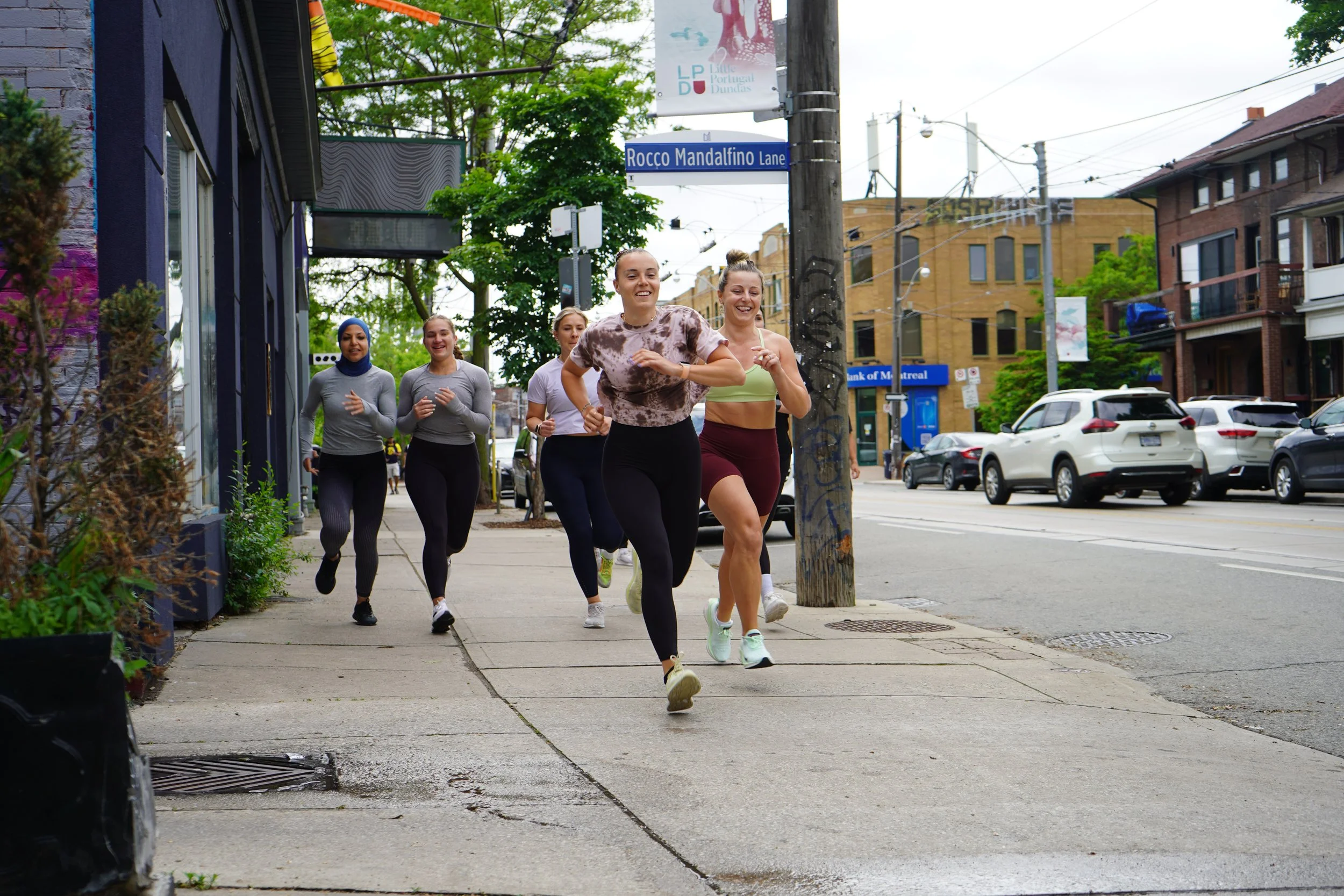
Builiding Knee Resilience
Building Knee Resilience in Hybrid Athletes (Run + Lift)
Strong knees aren’t built by avoiding load — they’re built by training it.
If you run, lift, or do both, your knees need to tolerate:
Deep ranges of motion
Repeated impact
Heavy strength work
Changes in speed and direction
This guide walks you through simple, effective exercises we use with hybrid athletes to build knee strength, control, and long-term resilience.
Who This Is For
This guide is for you if you:
Run regularly and lift weights
Want knees that hold up under volume and intensity
Are proactive about injury prevention
Don’t want to wait until pain forces you to stop training
If you’re dealing with sharp pain, swelling, catching, or instability, this guide is not a replacement for an assessment.
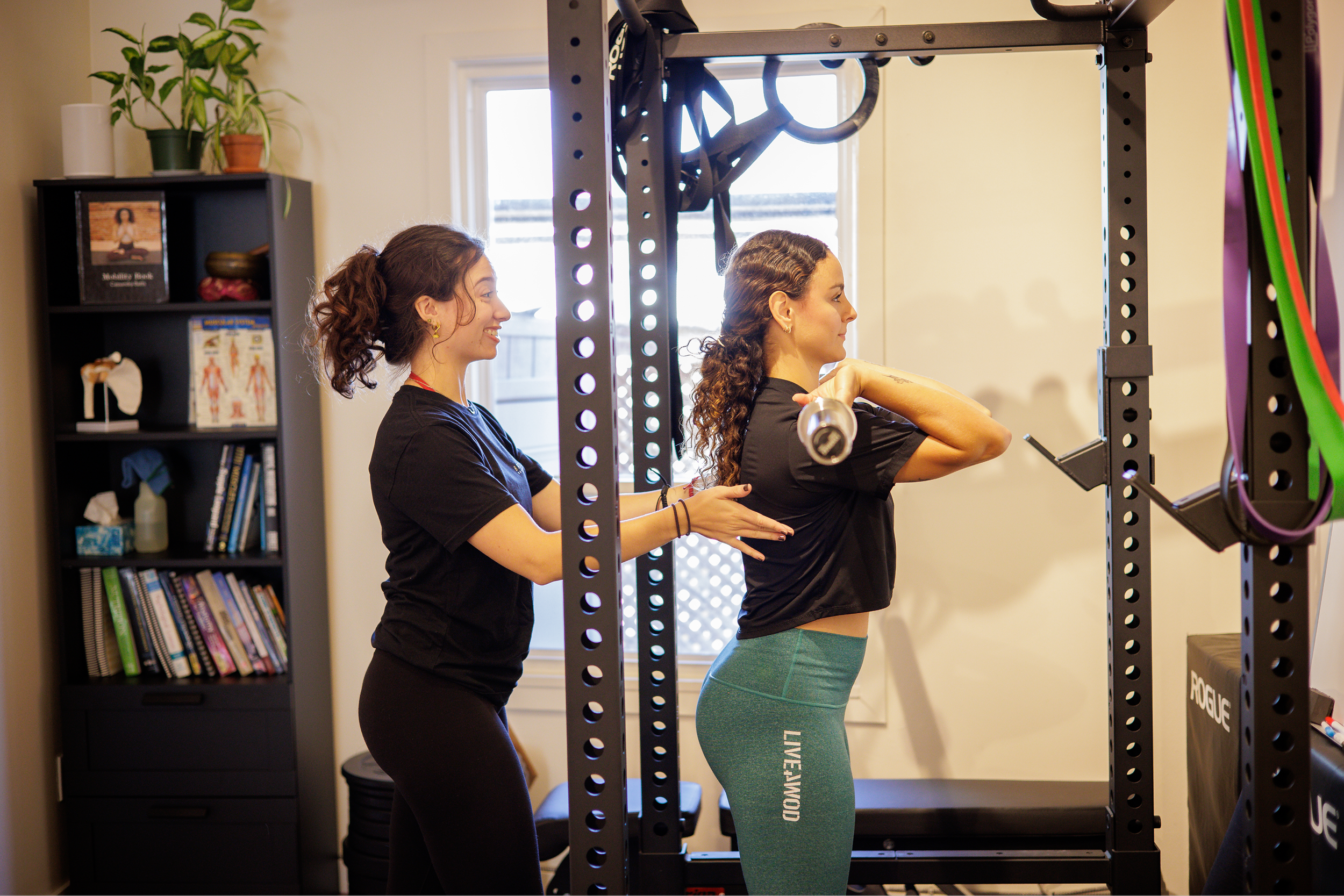
How Knees Get More Resilient
Knees adapt best when they’re exposed to progressive, specific stress.
That means:
Compound lifts are important but not enough on their own
Isolating and biasing the knee builds tolerance where it’s needed
Tendons respond to slow, controlled loading before speed
Balance and impact prepare the knee and tendons for real-world demands
This framework builds from control → strength → impact.
Block 1: Controlled Knee Loading (Strength)
Front Foot Elevated Split Squat
Why this matters
Biases the front of the knee
Builds tolerance through range
Applies controlled pressure to the joint
How to do it
Front foot elevated
Stay tall through the torso
Let the knee travel forward in a controlled way
Prescription
3–4 sets
6–10 reps per side
3–4 second slow lower
Progressions
Add load
Increase depth
Slow the tempo
Regressions
Reduce elevation
Bodyweight only
Shorter range
A little discomfort is okay (≤3/10), as long as it settles within 24 hours.
Poliquin Step-Down
Why this matters
Trains knee control
Challenges quad strength and tendon tolerance
Builds confidence on one leg
How to do it
Slow lower
Control the knee over the toes
No bouncing or dropping
Prescription
3 sets
6–8 controlled reps per side
Regressions
Lower step height
Backwards banded walking (band around hips)
Standing banded terminal knee extensions
Sled pulls (if available)
Progressions
Add load
Pause at the bottom
Increase step height
Block 2: Posterior Support (Hamstrings)
Stability Ball Hamstring Curl
Why this matters
Supports the knee from the back
Balances quad-dominant training
Improves control near full knee extension
How to do it
Heels on the ball
Hips stay lifted
Slow and controlled
Prescription
3 sets
8–12 reps
Progressions
Single-leg
Slower tempo
Regression
Partial range
Block 3: Balance & Joint Awareness
Tandem or Single-Leg Balance
Why this matters
Improves joint awareness
Prepares the knee for unpredictable forces
Builds control without heavy load
Prescription
2–4 sets
20–30 seconds per side
Progressions
Eyes closed
Light perturbations
Single-leg balance with reach
Block 4: Intro to Plyometrics (Optional but Powerful)
Plyometrics are about preparing the knee for impact, not max height or speed.
Keep these low-level and controlled.
Examples
Pogos
Jump and stick (shock absorption)
Low-amplitude line hops (hopping over a line and back)
Format
2–4 minutes total
Tabata style:
20 seconds work
10 seconds rest
Intensity (RPE)
Beginner: 1–3
Intermediate: 3–5
Advanced: 5–7+
Plyometrics are earned. Start easy and build gradually.
How to Use This Program
Train 2–3x per week
Pair with run days or lower-body lift days
You don’t need every exercise every session
Progress one variable at a time:
Load
Range
Speed
Consistency beats complexity.
Want This Tailored to You?
If you want this framework adjusted for:
Your running volume
Your lifting numbers
Past injuries or pain patterns
We’ll build a plan that fits your body and your training.